Christian — Settling
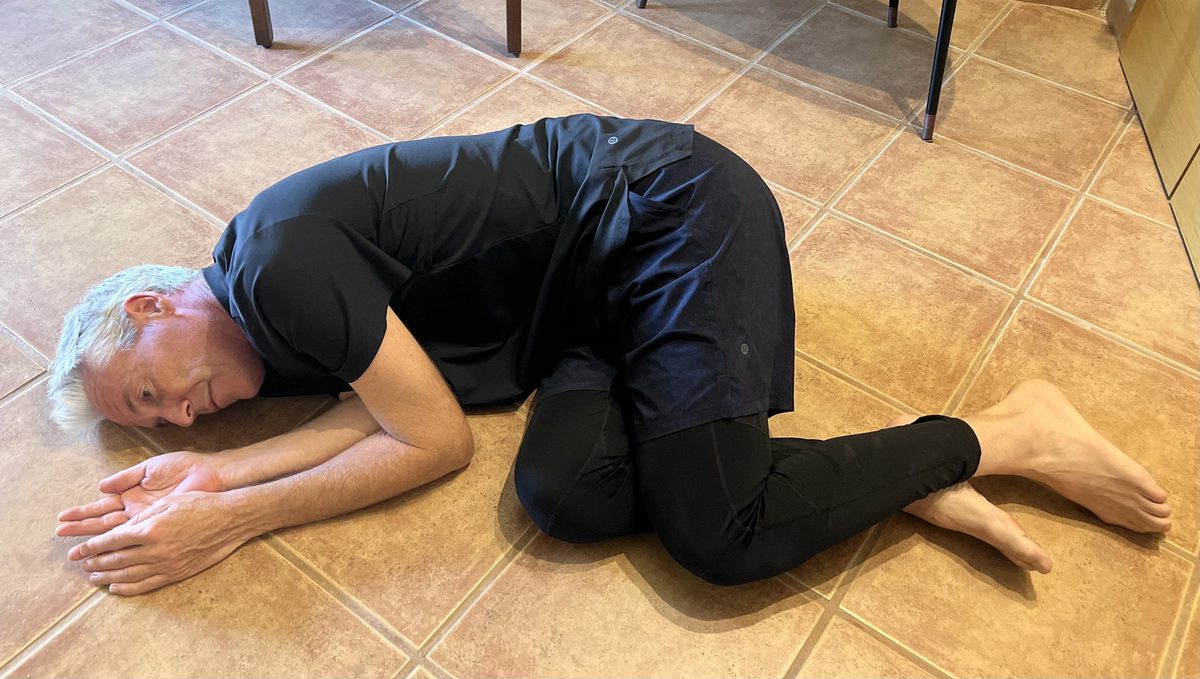
The session returns to the floor. Not the usual spot — the meditation room, a space Christian knows well, a place where the body has already learned to let go. A good place.
The intention
The aim is simple: to settle, and nothing more. No exploration, no search for the right position, no deliberate movement. Just placing the body on the floor and letting its weight do the rest.
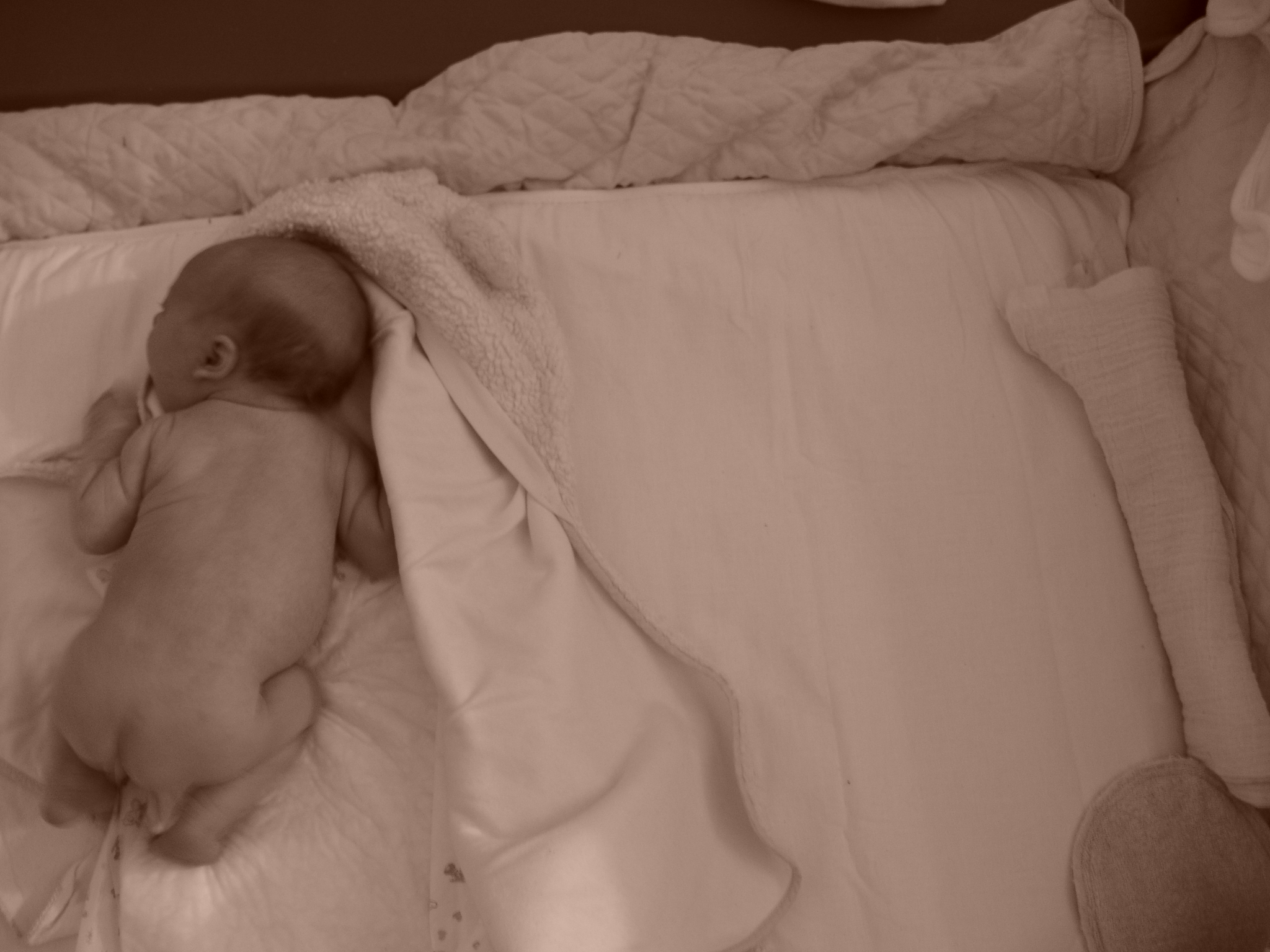
And this is exactly what the baby does. It is placed on the floor, in the bed, on the sofa — and it settles. It is stable. It does not arrive with muscular tension, with thoughts, with an agenda. It is completely settled. This is a key word in this process: to settle. And it illuminates everything the adult has forgotten.
What is not settled
When the body is observed with this intention — to approximate what the baby does effortlessly — it becomes clear that many parts are not settled. Not necessarily uncomfortable, but not settled. Tensions present, silent, masked by apparent comfort.
Each breath, each search for exhalation, becomes a way to release one part. Then another. Then another still. And when one part lets go, another retenses. It is a continuous dialogue, on both sides of the body — though the left side remains slightly more uncomfortable. This back and forth does not stop. It reveals just how many tensions the adult body carries without even knowing.
The connection
For over a year, Christian has practised a daily yoga discipline. And one of its fundamental principles is precisely to stabilise the body — not as an end in itself, but as a condition for being able to receive something. The body must first be stable and settled for information to arrive.
This is exactly the same logic in the development of the infant. The baby's first stage is to be settled — to find stability on the ground — in preparation for the stages that follow: exploring, crawling, lifting the head. If the body is not settled, nothing that follows can emerge.
What we retain
Settling is the foundation. The baby makes no effort to be on the floor. It is placed there, and it is there — without tension, without thought, without resistance. The adult arrives with everything: accumulated muscular tension, active thoughts, an intention that precedes the body. Rediscovering the ability to settle is rediscovering the very first competence of the infant — the one that makes everything else possible.
Breathing is the tool for progressive release. Each exhalation is an opportunity to release a zone. An arm, a shoulder, a hip. But the process is not linear: when one part lets go, another retenses. It is a constant back and forth, a dialogue between the body and gravity, exactly like the infant who moves ceaselessly — not from agitation, but from a search for stability.
Stabilising the body to receive — the logic is universal. The daily yoga practice Christian has followed for over a year aims at exactly the same objective: to stabilise the body so that it becomes available. The baby's development follows the same logic. Settling on the floor is not the end — it is the prerequisite. The body must first be stable before the next stages — exploring, crawling, rising — can emerge.
Adi — Immersion
Same bed, same darkness — but today, Adi adds a dimension. After the shower, naked, in the dark, she puts on noise-cancelling headphones and plays meditation music — an angelic voice, light, enveloping. The aim: to be entirely inside the sound, without any distraction from outside.
The sound bath
The experience is immediate. Adi feels the music through her body. Not just in the ears — the vibrations pass through the skin, the bones, the tissues. There is no outside noise, no solicitation. Just her, on a soft surface, in the dark, with the sound. It is a deep pleasure. Pure bliss.
The side
A significant detail. Today, without thinking, Adi began on the right side. She only noticed when she decided to turn to the other side. It was not a conscious choice — the body simply settled on the side where it wanted to go. And on both sides, the comfort was total.
What we retain
Creating the conditions for immersion is reproducing the infant's cocoon. After the shower, naked, in the dark, with headphones that filter all outside noise and enveloping music — Adi instinctively recreated the conditions of the infant's world: limited stimuli, warmth, enveloping sound. The baby in utero hears the mother's voice, the heartbeat, filtered sounds. What Adi has built is a voluntary return to that acoustic envelope.
The body no longer chooses the side — it starts with the right one. For the first time, Adi began on the right side without deciding to. She only noticed when she changed sides. The body is beginning to choose autonomously, exactly as the infant does — it does not "decide" which side to lie on, it simply goes where it goes.
Pure bliss returns — and this time, it stays. On Day 9, bliss was a flash — a precise moment when sound came out of the throat. On Day 12, bliss is the entire session. The difference: on Day 9, the body surprised itself. On Day 12, the body is placed in conditions that make bliss the natural state. This is the same progression as in the infant's first months — from moments of calm to sustained comfort.
← Back to journal